

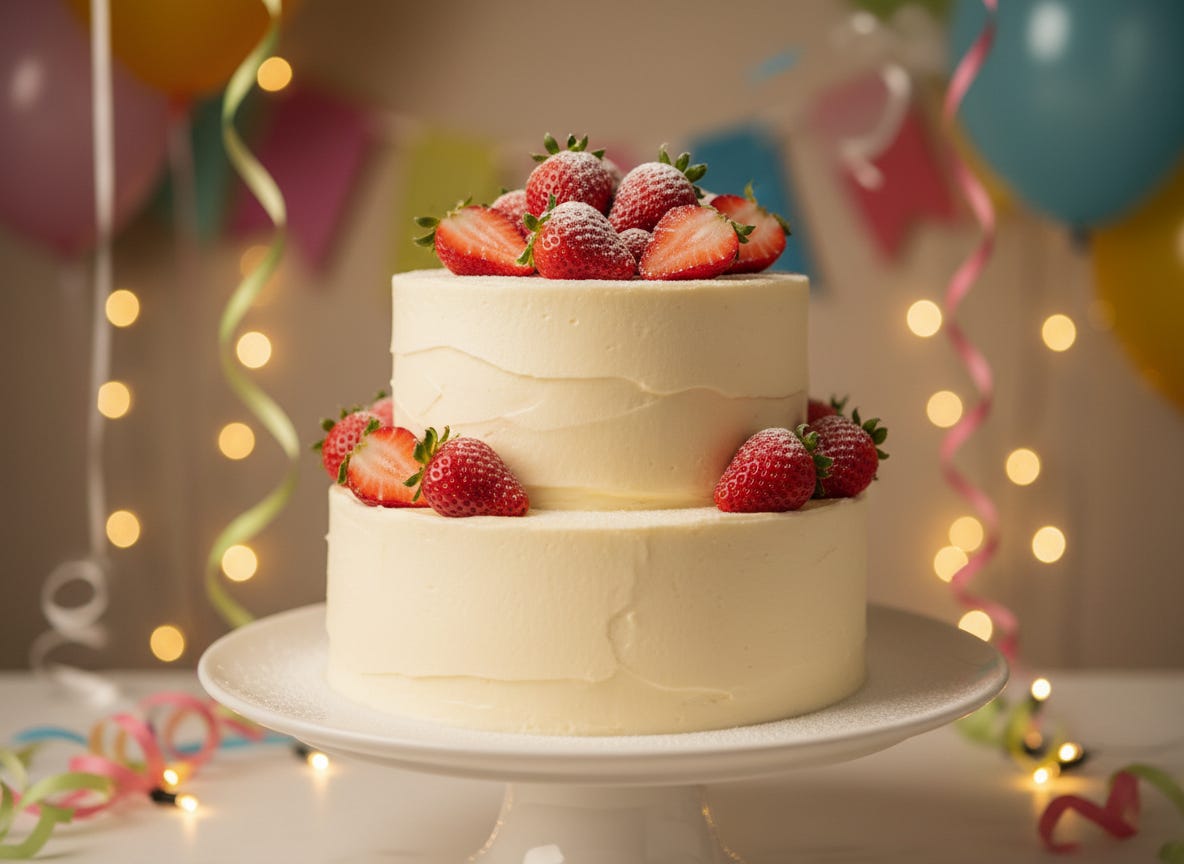
Have you ever hosted a party and discovered two of your guests share a birthday? It feels like “Fate”, right? Well, math has some news for you: it’s not that rare at all.
Here’s the catch: In a room of just 23 people, there’s a 50% chance that two people share the same birthday. With 70 people, that probability jumps to 99.9%.
Oh, sure.
Wait … What?
There are 365 days in a year, so shouldn’t you need way more people?
Why Our Intuition Fails Us
We instinctively think, “What are the odds someone shares my birthday?” And you’d be right—with 23 people, the chance someone matches your specific birthday is only about 6%.
But the birthday paradox isn’t asking that. It’s asking: “What are the odds that any two people in the room share a birthday?” That’s a very different question, because you’re not comparing to just yourself—you’re comparing everyone to everyone else. This seemingly small shift in perspective changes everything.
The Power of Pairs
Here’s where things get interesting. When you’re comparing everyone to everyone else, you’re not making 23 comparisons—you’re making way, way more.
Let’s count them:
Person 1 can be paired with 22 other people
Person 2 can be paired with 21 remaining people (we already counted their pairing with Person 1)
Person 3 can be paired with 20 remaining people
And so on...
Add it up: 22 + 21 + 20 + ... + 2 + 1 = 22*23/2=253 different pairs
With 253 opportunities for a match across 365 possible days, suddenly a 50% probability doesn’t seem so outrageous, does it?
This is the key insight: the number of comparisons grows much faster than the number of people. The mathematical formula is n(n-1)/2, where n is the number of people. That’s what’s called “quadratic growth”; it accelerates rapidly.
10 people = 45 pairs
20 people = 190 pairs
30 people = 435 pairs
50 people = 1,225 pairs
100 people = 4,950 pairs
The Math: Why 23 is the Magic Number
Let’s work through the actual calculation. Fair warning: we’re going to get a bit mathematical here, but I promise to make it as painless as possible.
The trick is to calculate the opposite: Instead of finding the probability that two people do share a birthday, we’ll find the probability that nobody shares a birthday. Then we’ll subtract from 100%.
Why? Because calculating “nobody shares” is much simpler than calculating all the different ways people could share birthdays (two people share one date, three people share another date, two pairs share different dates, etc.).
Let’s Build It Step by Step
Person 1 enters the room. They can have any birthday. Probability that their birthday is “unique so far” = 365/365 = 100%
Person 2 enters. For nobody to share yet, Person 2 must have a different birthday than Person 1. There are 364 days available out of 365 total days. Probability = 364/365 = 99.73%
Person 3 enters. They must avoid both previous birthdays. Probability = 363/365 = 99.45%
Person 4: 362/365 = 99.18%
And we continue this pattern...
The probability that ALL people have different birthdays is:
(365/365) × (364/365) × (363/365) × (362/365) × ... and so on
For 23 people, this multiplication gives us approximately 0.493, or 49.3%
This means there’s a 49.3% chance that all 23 people have different birthdays.
Therefore, the chance that at least two people share a birthday is:
1 - 0.493 = 0.507, or 50.7%
The Complete Table
Here’s how the probabilities grow:
10 people: 11.7% chance of a match
15 people: 25.3% chance
20 people: 41.1% chance
23 people: 50.7% chance ✨
30 people: 70.6% chance
40 people: 89.1% chance
50 people: 97.0% chance
60 people: 99.4% chance
70 people: 99.9% chance
By the time you have 100 people, the probability exceeds 99.99997%. It’s essentially certain.
An Eerie Birthday Factoid
Remarkably, three of the first five U.S. Presidents died on July 4th (John Adams, Thomas Jefferson, and James Monroe).
Coincidence? Probably!
The Birthday Paradox is here to remind us that coincidences are more common than we think.
Why This Feels Like Cheating (But Isn’t)
Even after seeing the math, many people feel like some details have been missed, that there should be a mistake somewhere. Let me address the common objections:
“But what about leap years?” Including February 29th actually makes matches slightly more likely because there are fewer options. The paradox still works.
“What if birthdays aren’t evenly distributed?” Great catch! Birthdays actually aren’t evenly distributed—more babies are born in late summer/early fall in many countries. This increases the chances of a match, making the paradox even stronger.
“You’re not accounting for twins!” If we include twins, the probability of matches goes up even more. The 23-person threshold is actually a conservative estimate.
“This still feels wrong.” I know! I feel the same. That’s what makes it a paradox. Our intuition isn’t broken: it’s just calibrated for individual probabilities (what are the odds for me?) rather than collective probabilities (what are the odds for any pair in the group?).
Why It Actually Matters
Beyond being a great mind-experiment to sharpen your thinking, the Birthday Paradox has several practical implications:
Cryptography and Security
Hash functions (which are crucial for digital security) are vulnerable to “birthday attacks.” If a hacker needs to find two different inputs that produce the same output, the Birthday Paradox tells us they’ll succeed much faster than you’d intuitively expect. This is why security protocols need much larger hash spaces than you might think.
Data Deduplication
Database engineers use birthday paradox math to estimate how likely duplicate entries are in large datasets. This affects everything from social media platforms to financial systems.
DNA Testing
With millions of people using ancestry DNA tests, how many false matches might occur by chance? The Birthday Paradox helps scientists calculate these probabilities and set appropriate thresholds for “matches.”
Network Analysis
In social networks or disease transmission modelling, the Birthday Paradox principle helps predict how quickly connections (or infections) will spread through a population.
Quality Control
Manufacturing systems use this math to predict the likelihood of duplicate serial numbers, identical defects, or other collision events in large-scale production.
The Bigger Lesson
The Birthday Paradox is teaching us something profound about how we naturally think about probability:
We’re wired to think about individual probabilities, not collective ones. We naturally ask “what are MY odds?” rather than “what are THE odds?”. We view ourselves as the protagonist, not side character.
This bias affects how we think about risk, coincidence, and randomness in daily life. We’re shocked when unlikely things happen, but we forget to account for all the opportunities they have to occur.
Consider:
“What are the odds I’d win the lottery?” Very low. “What are the odds someone wins in my city?” Pretty high, given millions of tickets.
“What are the odds I’d run into someone I know at the airport?” Low. “What are the odds anyone at this airport runs into someone they know?” Much higher.
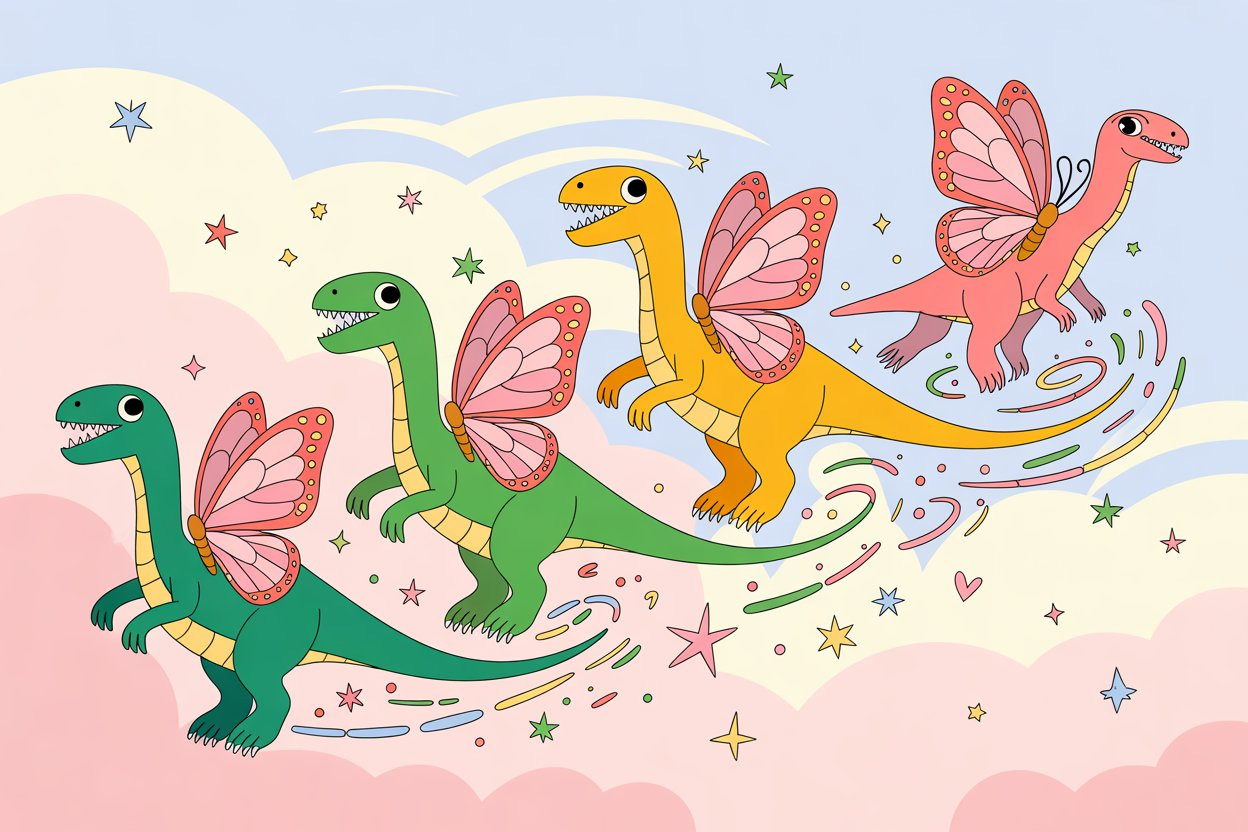
“What are the odds I’d have a bizarre dream featuring dinosaurs transforming into butterflies last night?” Small. “What are the odds someone on Earth had such a bizarre dream?” Essentially 100% (maybe a bit lower for this one — still, you get the picture).
The Birthday Paradox is the perfect invitation to correct this bias. Math often reveals truths our intuition misses, and that the universe is both more predictable and more surprising than we may initially think.
The Bottom Line
The Birthday Paradox teaches us humility, reminding us that:
Coincidences are more common than they feel
The number of possible interactions grows faster than we realize
Sometimes the counterintuitive answer is the correct one
Math can reveal truths that hide in plain sight
So next time you’re at a party and two people share a birthday, remember: the real surprise isn’t that it happened—it’s that you thought it wouldn’t.
Next week
Next Tuesday, check your mailbox for three puzzles to challenge your mind.
Until then, I wish you a wonderful week 🌸.
With love and curiosity,
Sybille